
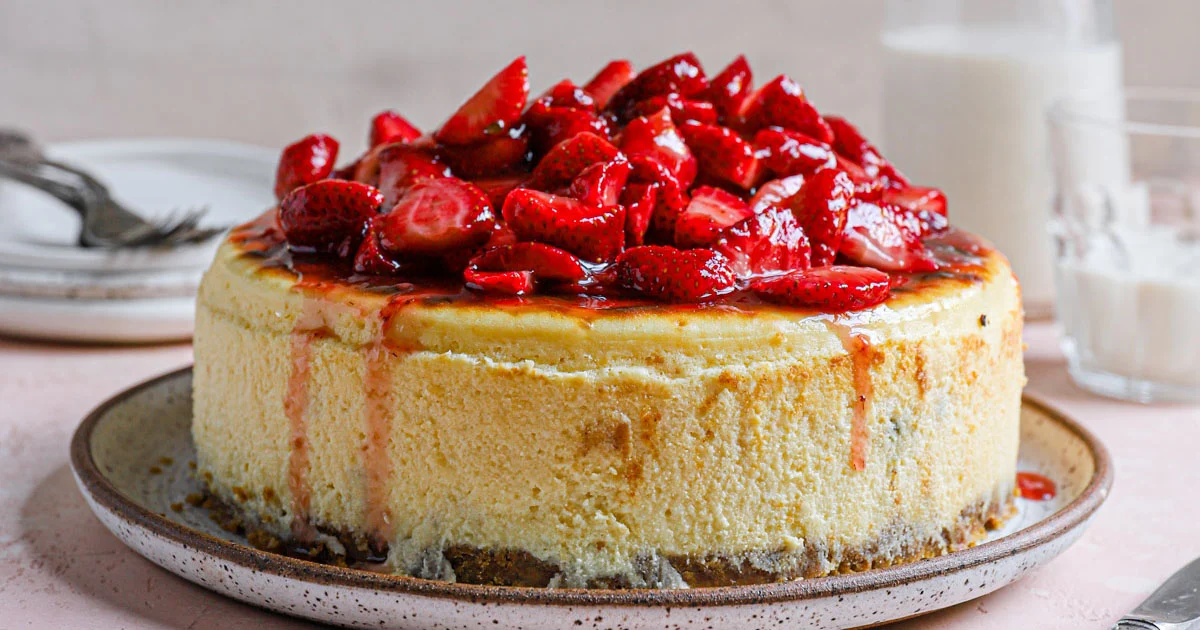
A perfectly baked cheesecake sitting on a cooling rack has a way of commanding attention long before the first slice is served. Its smooth ivory surface, rich aroma, and substantial weight promise a dessert that delivers pure indulgence. Few sweets have earned the iconic status that cheesecake enjoys, and among all its variations, none is more celebrated than the classic New York cheesecake.
Rich without being overwhelming, dense yet remarkably creamy, this beloved dessert has remained a staple in bakeries, restaurants, and family kitchens for generations. I find myself returning to it repeatedly because it relies on simple ingredients rather than elaborate techniques. The beauty of a classic New York cheesecake lies in its confidence. It does not need extravagant toppings or complicated flavors to impress. One slice is enough to explain why it has become one of America’s most enduring desserts.
The Legacy Behind the Dessert
Many desserts evolve dramatically over time, but classic New York cheesecake has remained surprisingly faithful to its roots. Its reputation was built on richness, simplicity, and an uncompromising commitment to texture. Unlike lighter cheesecakes found elsewhere, the New York version embraces density and creaminess in equal measure.
The dessert became especially popular throughout the twentieth century as bakeries across New York City perfected their own recipes. Each establishment developed slight variations, yet the core characteristics remained remarkably consistent. A thick cream cheese filling, a crisp crust, and a smooth finish became the defining elements that customers expected.
What continues to fascinate me about this dessert is how little it depends on decoration. Many modern desserts rely on elaborate presentation to create excitement. Classic New York cheesecake succeeds through flavor and texture alone, proving that true culinary classics never need excessive embellishment.
What Makes It Different
Not all cheesecakes are created equal. Some are airy and mousse-like, while others resemble custards. Classic New York cheesecake stands apart because of its rich structure and luxurious mouthfeel.
Cream cheese plays the leading role. The filling contains enough cream cheese to create a dense texture while maintaining remarkable smoothness. This balance is what gives each bite its signature richness without making the dessert feel heavy or unpleasant.
Another defining feature is restraint. Flavorings are typically kept minimal. Vanilla, lemon, and occasionally a touch of sour cream support the cream cheese rather than compete with it. The result is a dessert that feels focused and refined.
Ingredients You’ll Need
For a traditional classic New York cheesecake, I typically gather:
- 2 cups graham cracker crumbs
- 6 tablespoons melted butter
- 32 ounces cream cheese, softened
- 1¼ cups granulated sugar
- 4 large eggs
- 1 cup sour cream
- 1 tablespoon vanilla extract
- 1 tablespoon lemon juice
- Pinch of salt
These ingredients may seem simple, but together they create one of the most beloved desserts in baking history.
The Importance of Quality Cream Cheese
The soul of any classic New York cheesecake begins with cream cheese. Because it serves as the dominant flavor, quality matters enormously. Inferior cream cheese can result in a filling that lacks richness or develops an undesirable texture during baking.
I always allow cream cheese to reach room temperature before mixing. This small step prevents lumps and creates a smoother batter. Cold cream cheese often leads to excessive mixing, which can introduce unwanted air into the filling.
The best cheesecakes showcase the flavor of cream cheese rather than burying it beneath excessive sweetness. A balanced recipe allows its tangy richness to remain the star attraction.
Building the Perfect Crust
A good crust provides contrast to the creamy filling while contributing its own flavor. Graham cracker crumbs remain the traditional choice because their subtle sweetness complements the cheesecake beautifully.
Melted butter binds the crumbs together and helps create a firm base. Once pressed into the pan, the crust should be compact enough to hold its shape while remaining tender when sliced.
I enjoy pre-baking the crust for a few minutes before adding the filling. This step helps develop flavor and creates a more stable foundation for the cheesecake.
Preparing the Filling
The filling begins with softened cream cheese and sugar. Mixing them until smooth creates the foundation for the silky texture that defines the dessert. Patience during this stage pays significant dividends later.
Eggs are added gradually rather than all at once. This method allows them to incorporate more evenly and reduces the risk of overmixing. Excessive mixing can introduce air bubbles that may lead to cracks during baking.
Sour cream, vanilla, lemon juice, and salt complete the batter. Together, these ingredients add complexity while preserving the rich cream cheese flavor that makes the dessert so distinctive.
Why Sour Cream Matters
Sour cream contributes far more than moisture. Its subtle tang balances the sweetness of the filling and enhances the overall flavor profile. Without it, many cheesecakes can feel overly rich or one-dimensional.
The texture also benefits significantly. Sour cream helps create a smoother, creamier consistency that melts beautifully on the palate. It softens the density of the cream cheese without sacrificing structure.
A small amount goes a remarkably long way. Even a single cup can dramatically improve both flavor and texture.
The Role of Lemon
Lemon juice rarely dominates the flavor of classic New York cheesecake, yet its contribution is essential. It brightens the filling and prevents the richness from becoming overwhelming.
I appreciate how lemon works quietly in the background. Most people cannot immediately identify it, but they notice the freshness it brings to each bite. The cheesecake feels more balanced and lively because of its presence.
This subtle brightness helps transform a rich dessert into one that remains enjoyable from the first forkful to the last.
Baking With Care
The baking process demands patience. Cheesecake is not a dessert that responds well to rushing. Gentle heat allows the filling to cook evenly while maintaining its smooth texture.
A water bath is often recommended because it moderates temperature and reduces the likelihood of cracks. The surrounding moisture creates a gentler baking environment that helps preserve the creamy consistency.
The center should still retain a slight wobble when the cheesecake leaves the oven. Residual heat continues the cooking process as the dessert cools.
Preventing Cracks
Many home bakers worry about cracks, but they are usually preventable with a few simple techniques. Overmixing and rapid temperature changes are among the most common causes.
Allowing ingredients to reach room temperature helps create a smoother batter that bakes more evenly. Avoiding excessive mixing reduces trapped air that can expand and contract during baking.
Cooling gradually is equally important. Sudden changes in temperature can cause the surface to split. A slow cooling process allows the cheesecake to settle naturally.
The Importance of Chilling
A freshly baked cheesecake may smell wonderful, but patience remains essential. Chilling transforms the texture from soft and fragile into the dense, creamy consistency that defines classic New York cheesecake.
I prefer refrigerating it overnight whenever possible. The additional time allows flavors to develop fully while improving texture considerably. The difference between a cheesecake chilled for a few hours and one chilled overnight is remarkable.
The waiting period can feel difficult, but the reward is a significantly better dessert.
Serving the Cheesecake
Presentation often works best when kept simple. A clean slice of cheesecake served on its own allows the texture and flavor to take center stage.
Fresh berries provide a welcome contrast without overwhelming the dessert. Their natural acidity complements the richness beautifully while adding color to the plate.
A small dollop of whipped cream can also work wonderfully. The lightness of the cream balances the density of the cheesecake and creates an elegant finishing touch.
Popular Variations
Although I remain devoted to the traditional version, variations can introduce exciting new dimensions. Chocolate swirls add richness while maintaining the character of the original dessert.
Fruit toppings such as strawberries, cherries, or blueberries contribute freshness and visual appeal. Their bright flavors contrast beautifully with the creamy filling.
Caramel sauces, cookie crusts, and citrus infusions offer additional opportunities for creativity. The versatility of cheesecake allows for endless experimentation while preserving its core appeal.
Common Mistakes to Avoid
One of the most frequent mistakes is overbaking. A cheesecake that remains in the oven too long can become dry and lose its signature creaminess. Watching for a slight jiggle in the center helps prevent this problem.
Using cold ingredients can also create issues. Lumps in the batter often result from cream cheese that has not fully softened before mixing.
Another mistake involves cutting too soon. Even a perfectly baked cheesecake requires sufficient chilling time to achieve the texture people expect.
Storing Leftovers
Classic New York cheesecake stores exceptionally well. Covered properly, it can remain fresh in the refrigerator for several days without losing quality.
The flavor often improves slightly after the first day. Ingredients continue to meld together, creating a more cohesive and balanced dessert.
Individual slices can also be frozen for longer storage. Proper wrapping helps preserve texture and flavor remarkably well.
Why This Dessert Endures
Food trends come and go, yet classic New York cheesecake continues to maintain its place among the world’s most beloved desserts. Its appeal rests on fundamentals rather than novelty. Rich flavor, creamy texture, and straightforward ingredients create an experience that feels timeless.
Part of its enduring popularity comes from its versatility. It can appear at weddings, birthdays, holiday gatherings, restaurant menus, and casual family dinners without ever feeling out of place.
The dessert also offers a sense of familiarity. One slice can evoke memories of celebrations, family traditions, and special occasions, making it far more than simply a sweet ending to a meal.
Final Thoughts
Classic New York cheesecake represents everything I admire about great desserts. It transforms humble ingredients into something elegant, memorable, and deeply satisfying. The rich cream cheese filling, buttery crust, subtle tang, and luxurious texture come together in a way that feels both comforting and refined.
Whether served plain, topped with fresh fruit, or accompanied by a spoonful of whipped cream, classic New York cheesecake remains a dessert worthy of its legendary reputation. Its enduring popularity is no accident. Decade after decade, it continues to remind us that sometimes the simplest recipes deliver the most extraordinary results.