
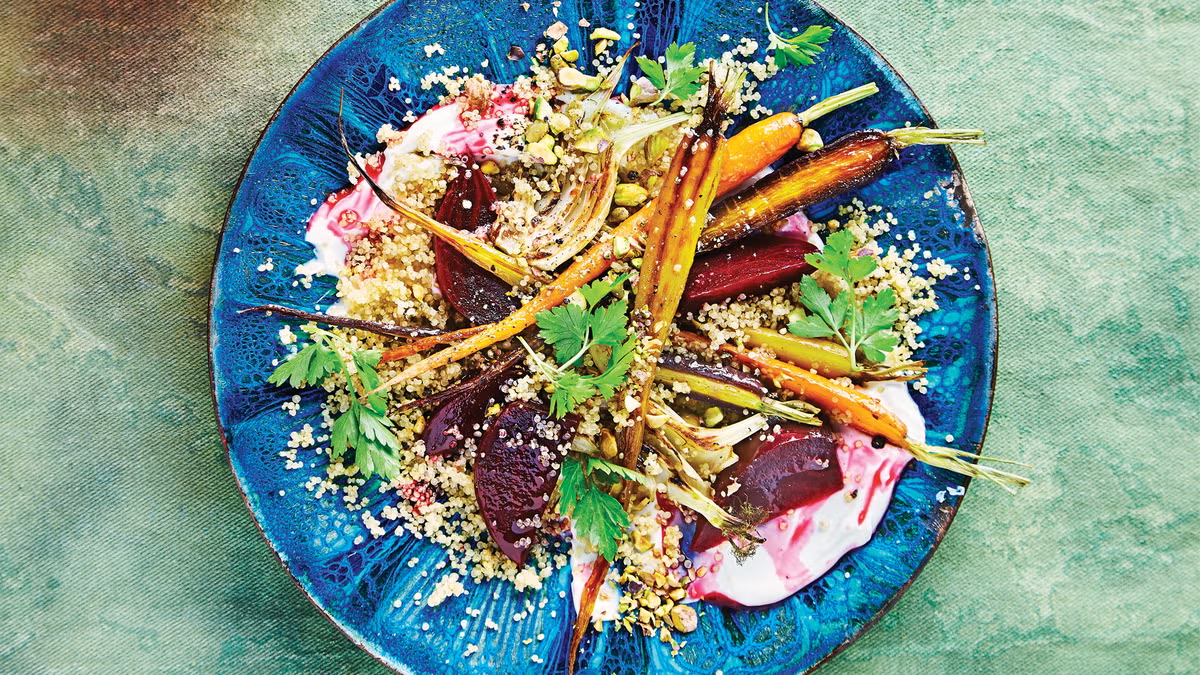
Few dishes strike the balance between wholesome and satisfying quite like a quinoa and roasted vegetable salad. Packed with colorful vegetables, hearty grains, and vibrant flavors, this salad manages to feel nourishing without sacrificing taste. It is one of those recipes I return to whenever I want something fresh, filling, and versatile enough to work as either a main course or a side dish.
What makes this salad particularly appealing is the contrast between the warm, caramelized vegetables and the light, fluffy quinoa. Roasting brings out the natural sweetness of the vegetables, while quinoa provides a nutty foundation that absorbs every flavor around it. Combined with a bright dressing and fresh herbs, the result is a dish that feels both comforting and refreshing.
Why Quinoa Works So Well in Salads
Quinoa has become a staple ingredient in many kitchens, and for good reason. Its mild flavor, delicate texture, and ability to absorb seasonings make it an excellent base for salads.
I appreciate how quinoa contributes substance without making a dish feel heavy. Unlike some grains that can dominate a recipe, quinoa supports the surrounding ingredients while still offering its own pleasant nuttiness. Its tiny grains also distribute evenly throughout the salad, ensuring that every bite contains a balanced mix of flavors and textures.
Another advantage is its versatility. Quinoa pairs equally well with vegetables, herbs, cheeses, nuts, and a variety of dressings. This flexibility makes it an ideal ingredient for creating salads that can be adapted to different seasons and personal preferences.
The Magic of Roasting Vegetables
Roasting transforms ordinary vegetables into something extraordinary. The high heat encourages caramelization, bringing out natural sweetness while creating rich, complex flavors that are difficult to achieve through other cooking methods.
One of the reasons I enjoy this salad so much is the depth that roasted vegetables provide. Instead of relying solely on raw ingredients, the salad incorporates vegetables that have been softened, sweetened, and slightly crisped by the oven.
The process also creates a wonderful contrast with the quinoa. The fluffy grains absorb some of the vegetable juices and dressing, resulting in a dish where every component contributes to the overall flavor.
Choosing the Best Vegetables
The beauty of a quinoa and roasted vegetable salad lies in its flexibility. A wide variety of vegetables can be used, allowing the recipe to evolve with the seasons.
Bell peppers are among my favorite choices. Their natural sweetness becomes even more pronounced during roasting, and their vibrant colors make the salad visually appealing. Red, yellow, and orange peppers all contribute slightly different flavors while creating a colorful presentation.
Zucchini is another excellent option. Its tender texture and mild flavor allow it to absorb seasonings beautifully, making it a natural companion for quinoa. Roasted zucchini also adds a softness that contrasts nicely with crunchier ingredients.
Red onions bring depth and sweetness once roasted. Their sharp raw flavor mellows significantly in the oven, creating a rich and savory element that enhances the entire dish.
Sweet Potatoes Add Comfort and Substance
Whenever I want to make the salad more substantial, sweet potatoes are often my first addition. Their natural sweetness pairs beautifully with roasted vegetables and complements quinoa’s earthy flavor.
Roasting sweet potatoes intensifies their flavor while creating slightly crisp edges and a creamy interior. This combination adds both texture and richness to the salad without making it feel overly heavy.
The vibrant orange color also contributes visual appeal, making the finished dish even more inviting. Few ingredients enhance both flavor and presentation as effectively as roasted sweet potatoes.
Fresh Herbs Bring Brightness
While roasted vegetables provide depth and warmth, fresh herbs introduce the brightness needed to balance the dish. Their fragrance and freshness help prevent the salad from feeling too rich.
Parsley is one of my favorite additions because of its clean flavor and vibrant green color. Chopped finely, it disperses throughout the salad and adds freshness to every bite.
Fresh basil can also work beautifully, especially during warmer months. Its aromatic qualities pair naturally with roasted vegetables while contributing another layer of complexity. Depending on the ingredients being used, mint can also provide a refreshing contrast that enhances the overall flavor profile.
Building Flavor With a Simple Dressing
The dressing plays a critical role in bringing all the ingredients together. Because the roasted vegetables already provide so much flavor, a simple vinaigrette is often all that is needed.
Extra virgin olive oil serves as the foundation. Its richness coats the quinoa and vegetables while enhancing their natural flavors. Fresh lemon juice adds acidity and brightness, creating balance throughout the dish.
A little Dijon mustard can help emulsify the dressing while introducing subtle depth. Combined with garlic, salt, and freshly cracked black pepper, it creates a vinaigrette that complements the ingredients without overshadowing them.
The goal is to unify the salad while allowing the roasted vegetables and quinoa to remain the stars.
The Importance of Properly Cooked Quinoa
Cooking quinoa correctly is essential for achieving the best possible texture. Overcooked quinoa can become mushy, while undercooked quinoa retains an unpleasant firmness.
I usually rinse quinoa thoroughly before cooking to remove its natural coating, which can contribute bitterness. This simple step significantly improves the final flavor.
Once cooked, the grains should be tender yet distinct. Allowing the quinoa to cool slightly before assembling the salad helps preserve the texture while preventing the vegetables from becoming overly soft.
The result should be light and fluffy quinoa that blends seamlessly with the roasted vegetables and dressing.
Adding Cheese for Extra Richness
Although entirely optional, cheese can add another layer of flavor and texture to a quinoa and roasted vegetable salad.
Crumbled feta is one of my preferred choices. Its tangy, salty character contrasts beautifully with the sweetness of the roasted vegetables while adding creaminess throughout the dish.
Goat cheese is another excellent option. Its soft texture and mild tanginess create a luxurious element that complements both the quinoa and the vegetables. Either cheese can elevate the salad while maintaining its fresh and wholesome character.
Nuts and Seeds for Texture
Texture is one of the defining features of a great salad, and nuts or seeds can provide the crunch needed to create contrast.
Toasted almonds work particularly well because their nutty flavor complements quinoa naturally. They also add a satisfying crunch that enhances every bite.
Pumpkin seeds are another favorite addition. Their subtle flavor and crisp texture fit beautifully within the salad while contributing visual interest. Toasting them beforehand intensifies their flavor and improves their crunch.
These additions may seem small, but they often make a significant difference in the overall experience.
Making the Salad a Complete Meal
One of the reasons I enjoy this recipe so much is its ability to function as a complete meal. The combination of quinoa and vegetables already provides substantial nutrition, but additional ingredients can make it even more satisfying.
Grilled chicken is a natural choice. Its savory flavor complements the roasted vegetables while adding protein that transforms the salad into a hearty lunch or dinner.
Chickpeas also work exceptionally well. Their creamy texture pairs naturally with quinoa and roasted vegetables while maintaining the salad’s vegetarian appeal. They absorb the dressing beautifully and contribute additional substance.
For a Mediterranean-inspired variation, roasted chickpeas and feta create a particularly satisfying combination.
Why This Salad Is Perfect for Meal Prep
Many salads lose their appeal after spending time in the refrigerator, but quinoa and roasted vegetable salad often improves after a few hours.
As the ingredients sit together, the quinoa absorbs some of the dressing, allowing the flavors to blend more thoroughly. The roasted vegetables continue to release subtle sweetness, creating a more cohesive dish.
This makes the salad an excellent option for meal preparation. A large batch can provide lunches and dinners throughout the week without sacrificing quality or flavor.
Its durability also makes it ideal for picnics, potlucks, and packed lunches where freshness and texture are important.
Seasonal Variations Worth Exploring
One of the greatest strengths of this salad is its adaptability. Seasonal produce can be incorporated throughout the year to create entirely different experiences.
During summer, roasted eggplant and cherry tomatoes introduce bright flavors and vibrant colors. Their sweetness intensifies during roasting, creating a delicious seasonal variation.
In autumn, roasted butternut squash and Brussels sprouts add warmth and richness. Their flavors pair particularly well with quinoa and a lemon-based dressing.
Spring vegetables such as asparagus and peas can create a lighter version that feels especially fresh and vibrant. The possibilities are nearly endless, making the salad suitable for every season.
Common Mistakes to Avoid
A few simple mistakes can affect the quality of the finished dish. One of the most common is overcrowding the roasting pan. Vegetables need space to caramelize properly. If packed too tightly, they steam instead of roast, resulting in less flavor and texture.
Another issue is under-seasoning. Both quinoa and vegetables benefit from adequate seasoning, so tasting and adjusting throughout the cooking process is important.
Using too much dressing can also overwhelm the ingredients. The goal is to enhance the flavors, not mask them. A light coating is usually sufficient to achieve the desired balance.
What Makes This Salad So Popular
Quinoa and roasted vegetable salad continues to gain popularity because it delivers a remarkable combination of flavor, nutrition, and versatility. It feels wholesome without being restrictive and satisfying without being heavy.
The roasted vegetables provide depth and sweetness, the quinoa contributes substance, and the dressing adds brightness. Fresh herbs, nuts, and optional cheese create additional layers of flavor and texture that keep every bite interesting.
Its adaptability also plays a major role in its appeal. It can be customized endlessly while remaining recognizable and comforting. Few dishes offer such flexibility while maintaining consistent quality.
Final Thoughts
A quinoa and roasted vegetable salad showcases how simple ingredients can create extraordinary results when prepared thoughtfully. Fluffy quinoa, caramelized vegetables, fresh herbs, and a bright dressing come together to form a dish that feels both nourishing and deeply satisfying.
What I appreciate most is its versatility. It works as a light lunch, a substantial dinner, a side dish for gatherings, or a meal-prep staple for busy weeks. The balance of textures and flavors ensures that it never feels repetitive, while the endless possibilities for customization keep it exciting throughout the year.
Fresh, colorful, and packed with flavor, a quinoa and roasted vegetable salad is more than just a healthy option. It is a recipe that celebrates the natural beauty of simple ingredients and proves that wholesome food can be every bit as delicious as it is satisfying.