
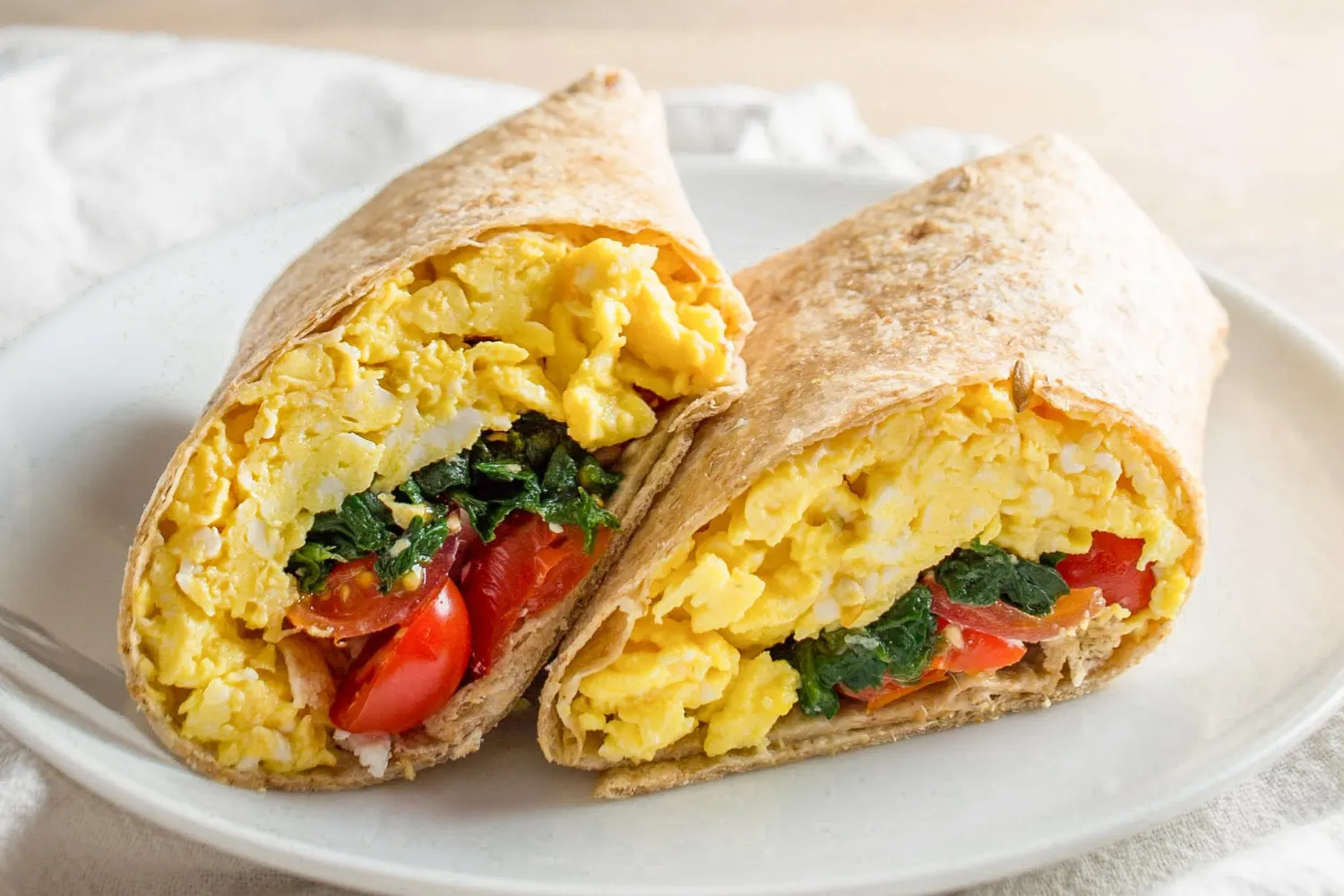
A warm pan on the stove has a way of setting the tone for a kitchen before anything else begins to make sense. The scent of greens meeting heat and the faint saltiness of cheese melting into soft folds of egg can shift a morning into something more grounded. In moments like this, breakfast feels less like routine and more like a quiet act of construction.
What stays with me most is how simple ingredients behave differently under gentle heat and careful timing. Eggs tighten into softness rather than dryness, spinach collapses into silk, and feta carries its salt through every layer without needing much intervention. Spinach and Feta Breakfast Wraps sit comfortably in that space where restraint produces more depth than excess ever could.
The Foundation Of Flavor And Texture
The base of a good breakfast wrap begins long before anything reaches the pan, and the ingredients decide the outcome more than technique alone. Eggs form the structure, but their treatment determines whether the filling stays tender or becomes heavy. A small amount of salt is enough to lift the natural flavor of the eggs without overpowering the other components.
Fresh spinach brings both moisture and earthiness, and its transformation under heat is almost immediate. It reduces quickly, concentrating its flavor while softening into a texture that blends seamlessly with eggs. Feta enters later, not as a melting cheese but as a presence that holds shape while gradually releasing salt and creaminess into the mixture.
Spinach and Feta Breakfast Wraps depend on balance rather than intensity. Tortillas or flatbreads act as the vessel, and their role is to support rather than compete with the filling. A light brush of olive oil or butter on the surface of the pan helps the wrap toast gently, adding structure without drying it out.
Building The Filling With Control
Heat management becomes the quiet force behind the filling, shaping everything from texture to moisture. Eggs should be beaten just enough to unify yolks and whites, but not so much that they lose body. A gentle pour into a warm pan allows them to set slowly, creating soft folds rather than rigid curds.
Spinach enters the pan while the eggs are still slightly loose, allowing it to wilt directly into the mixture. This timing ensures that moisture from the greens is absorbed into the eggs instead of pooling at the bottom. Feta is added toward the end so it softens slightly without fully melting, maintaining small pockets of saltiness throughout the filling.
Spinach and Feta Breakfast Wraps reach their character at this stage, where everything begins to come together in a single pan. The filling should remain moist but not wet, structured but not firm. A touch of black pepper adds depth, while a hint of olive oil rounds out the flavor without overwhelming the natural ingredients.
The Art Of Wrapping And Toasting
Assembly begins with warmth, and timing plays a critical role in how the final wrap holds together. A tortilla or flatbread should be warmed just enough to become flexible, preventing cracks or tearing during folding. The filling is placed slightly off-center to allow room for rolling without overflow.
The wrapping process is less about precision and more about containment. The sides fold inward first, followed by a slow roll that keeps tension steady without squeezing out the filling. Spinach and Feta Breakfast Wraps rely on this balance so the interior remains intact while the exterior holds its shape.
Once wrapped, the final step of toasting brings structure and texture together. A lightly oiled pan crisps the outside just enough to create contrast with the soft interior. The surface should develop a faint golden color while maintaining flexibility, avoiding the rigidity that comes from excessive heat.
This stage also enhances flavor in subtle ways, as the tortilla absorbs warmth from the filling while developing a slight crunch on the outside. The contrast between crisp exterior and soft interior is what defines the experience more than any single ingredient. When done correctly, the wrap feels complete without needing additional seasoning or garnish.
Serving Warmth And Subtle Variations
Serving immediately after toasting preserves both texture and temperature, which are essential to the experience. A wrap left too long tends to soften unevenly as steam escapes, which can dull the contrast between layers. Freshly made Spinach and Feta Breakfast Wraps hold their structure best when enjoyed right away.
A light drizzle of olive oil over the top can enhance richness without making the wrap heavy. Some prefer a touch of lemon juice, which introduces brightness that cuts through the saltiness of feta. These additions should remain minimal, acting as accents rather than defining elements.
Variations can shift the profile without changing the identity of the dish. Adding sautéed onions introduces sweetness that deepens the overall flavor, while a few chopped herbs like dill or parsley add freshness. Even small changes in seasoning can shift the perception of balance, which is why restraint remains important throughout.
Texture also plays a role in variation, especially when adjusting the cooking of the eggs. Softer eggs create a creamier interior, while slightly firmer eggs provide more structure for a cleaner bite. Spinach and Feta Breakfast Wraps adapt easily to these adjustments without losing their core identity.
Final Thoughts
A breakfast wrap like this does not rely on complexity to feel complete. It depends instead on timing, heat, and attention to how each ingredient transforms under simple conditions. Spinach and Feta Breakfast Wraps show how a few components can create something cohesive when handled with care rather than urgency.
What remains after the last bite is a sense of balance between richness and freshness, salt and softness, structure and ease. The wrap holds together because nothing within it tries to dominate the others, and that quiet harmony is what gives it lasting appeal. In the end, it is a reminder that simplicity, when treated with respect, rarely needs improvement.