
A blender has a way of changing the pace of a kitchen, turning solid ingredients into something that feels immediate and fluid. The sound alone signals a shift from preparation to transformation, where texture becomes the main focus rather than technique or timing. Breakfast in this form leans toward freshness and balance, built on ingredients that already carry familiarity.
Peanut Butter Banana Smoothie Bowl sits in that intersection between nourishment and indulgence, where creaminess and structure meet in a single bowl. The goal is not just to blend fruit and nut butter, but to create a consistency that can hold toppings without losing its shape. What follows is a careful balance of thickness, flavor depth, and contrast that makes each spoonful feel complete.
Building A Thick And Creamy Base
The foundation of this smoothie bowl begins with frozen bananas, which provide both natural sweetness and structural body. Their frozen state is essential, since it creates the thick, spoonable texture that distinguishes a bowl from a drink. Fresh bananas alone would result in a thinner consistency that lacks stability under toppings.
Peanut butter adds richness and depth, bringing a roasted nuttiness that anchors the fruit’s sweetness. Its fat content contributes to creaminess while also helping the mixture hold together once blended. A small amount goes a long way, and too much can overwhelm the balance between fruit and texture.
Peanut Butter Banana Smoothie Bowl relies heavily on how liquid is controlled during blending. Milk or a plant-based alternative is added gradually, just enough to help the blades move without thinning the mixture too much. The goal is a dense, almost soft-serve-like consistency that can be scooped rather than poured.
Ice can sometimes be used, but it tends to dilute flavor if not handled carefully. Frozen bananas alone are usually enough to create the desired texture. When blended properly, the base should feel thick enough to support toppings without sinking or blending into them.
Flavor Balance And Ingredient Harmony
Banana and peanut butter form the central pairing, but balance is what keeps the bowl from becoming overly heavy. The natural sweetness of banana softens the richness of peanut butter, while the nut butter adds depth that prevents the fruit from feeling one-dimensional. This contrast is what gives the base its character.
Peanut Butter Banana Smoothie Bowl benefits from small additions that refine rather than redefine the flavor. A touch of vanilla enhances sweetness without adding sugar, while a pinch of salt sharpens the peanut butter and brings clarity to the overall profile. These adjustments are subtle but noticeable in the final taste.
Sweeteners can be added, though often they are unnecessary if bananas are ripe enough. Honey or maple syrup can be used sparingly to adjust flavor intensity, but the goal is not to mask natural ingredients. The bowl works best when sweetness feels integrated rather than layered on top.
Cocoa powder or cinnamon can also shift the flavor profile slightly without disrupting structure. Cocoa introduces bitterness that contrasts with banana, while cinnamon adds warmth that enhances the nutty undertone. These variations remain optional and depend on personal direction rather than necessity.
Blending Technique And Texture Control
The blending process defines everything about the final result. Starting on a low speed allows the frozen banana to break down gradually without straining the blender. As the mixture begins to form, peanut butter is incorporated so it distributes evenly rather than clumping.
Peanut Butter Banana Smoothie Bowl requires patience during blending, since rushing the process often leads to overheating or uneven texture. Pausing to scrape down the sides ensures that all ingredients are fully integrated. This step prevents pockets of unblended banana or concentrated peanut butter from forming.
Liquid is introduced slowly and only as needed. Adding too much at once can turn the mixture into a drink rather than a bowl. The ideal consistency is thick enough to hold its shape but soft enough to move easily under a spoon.
Once fully blended, the mixture should have a smooth, dense texture that resembles soft ice cream. It should not pour freely but instead settle into the bowl with slight resistance. This structure is what allows toppings to sit properly without sinking.
Toppings That Create Contrast And Structure
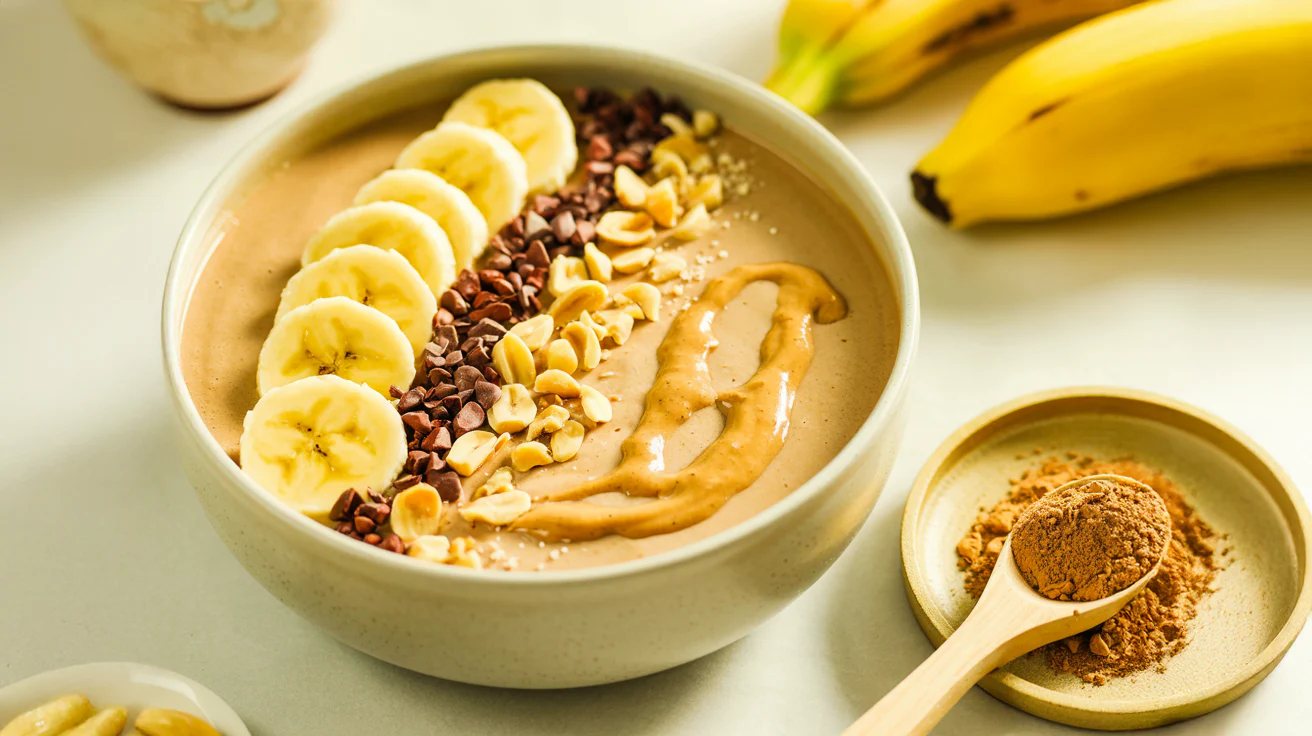
Toppings are where texture contrast becomes essential. Fresh fruit adds brightness and acidity that balances the richness of the base. Sliced banana, berries, or even thin apple slices can be used depending on preference and availability.
Crunch plays an equally important role in finishing the bowl. Granola adds structure and a toasted flavor that contrasts with the creaminess underneath. Nuts or seeds introduce additional layers of texture that keep each bite varied and engaging.
Peanut Butter Banana Smoothie Bowl naturally supports a range of toppings because of its neutral yet rich base. Drizzling extra peanut butter over the top reinforces flavor while also adding visual appeal. A light swirl across the surface creates both contrast and cohesion.
Coconut flakes or cacao nibs can also be added for texture variation. These elements do not dominate but instead provide interruption within the softness of the base. The goal is to build contrast without overwhelming the smooth foundation beneath.
Serving Temperature And Final Assembly
Temperature plays a critical role in how the bowl is experienced. The base should be cold enough to hold its structure but not so frozen that it becomes difficult to scoop. Serving immediately after blending ensures the best balance between firmness and softness.
Peanut Butter Banana Smoothie Bowl begins to soften if left too long at room temperature, which can affect both texture and topping placement. This is why assembly should happen quickly once blending is complete. Toppings should be added in a way that distributes weight evenly across the surface.
Layering matters even in something as simple as a smoothie bowl. Heavier toppings are best placed first, followed by lighter elements that sit on top. This prevents sinking and helps maintain visual structure throughout the bowl.
A final drizzle of peanut butter or honey can bring cohesion to the entire presentation. It ties toppings together visually while also reinforcing the central flavor profile. This finishing touch should remain light so it enhances rather than overwhelms.
Final Thoughts
Peanut Butter Banana Smoothie Bowl is built on simplicity, but its success depends entirely on control over texture and balance. Each ingredient plays a defined role, from frozen bananas creating structure to peanut butter adding richness and depth. The blending process determines whether those elements come together smoothly or fall apart into inconsistency.
What remains is a bowl that feels both nourishing and satisfying, where creaminess and crunch coexist in a single spoonful. The combination of fruit, nut butter, and toppings creates a layered experience that changes with every bite. In the end, it is a reminder that even the simplest ingredients can feel complete when handled with care and attention to detail.