
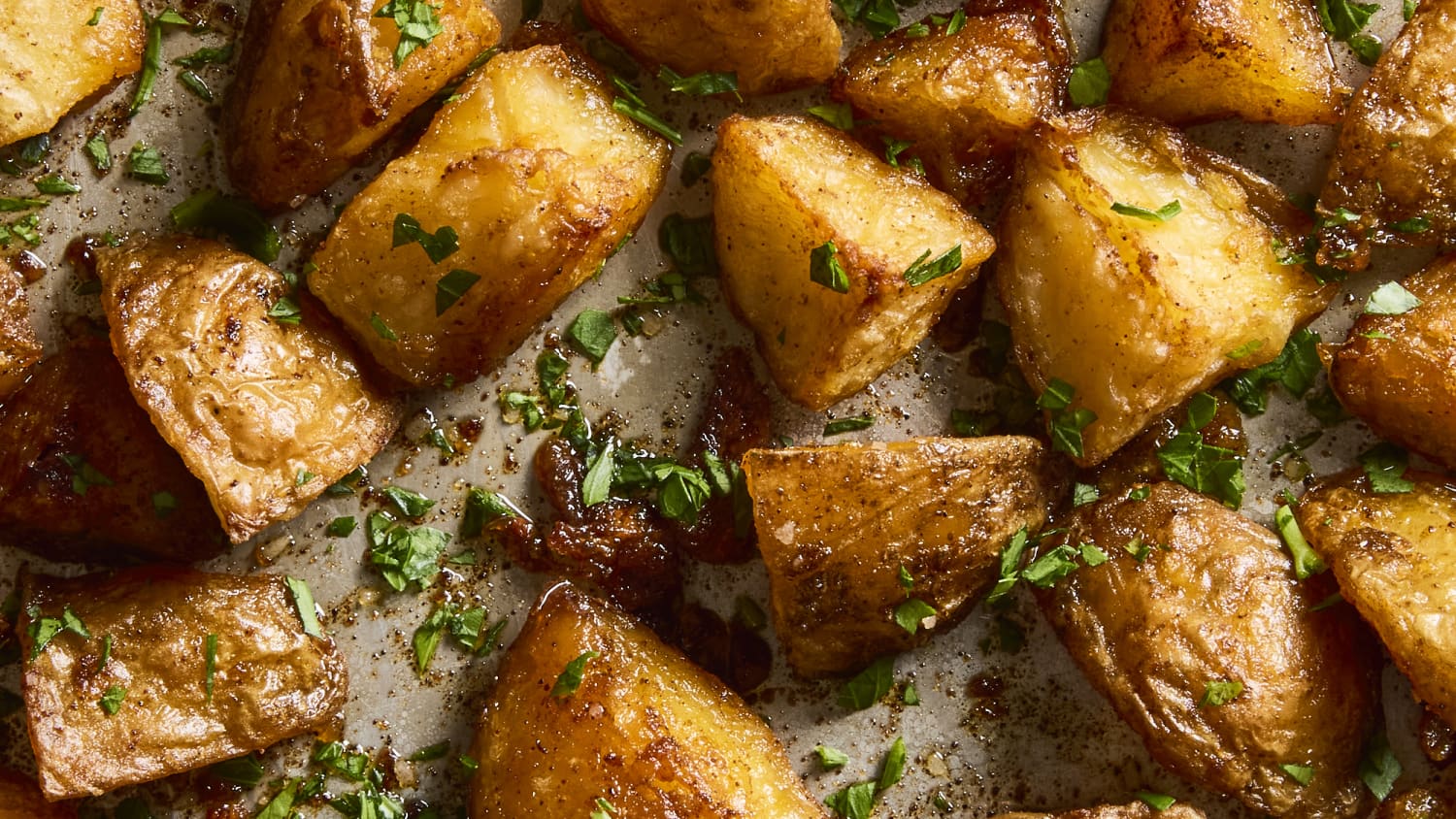
A skillet heating on the stove carries a kind of anticipation that builds slowly in the kitchen, long before any food is added. The sound of oil beginning to shimmer and the faint scent of garlic or onion waiting nearby creates a sense of structure for the morning. Breakfast often starts here, in this quiet transition between raw ingredients and something far more satisfying.
Crispy Breakfast Potatoes With Herbs belong to that space where patience and heat do most of the work. The goal is not just browning, but building contrast between a crisp exterior and a soft, almost creamy interior. Every step matters, from how the potatoes are cut to how they meet the pan, and nothing about the process benefits from rushing.
Selecting And Preparing The Potatoes
The foundation of this dish begins with the potatoes themselves, and their variety influences the final texture more than any seasoning ever will. Waxy potatoes hold their shape well, while starchy varieties develop a fluffier interior once cooked. I tend to work with a balance of both depending on what kind of contrast I want between crispness and softness.
Crispy Breakfast Potatoes With Herbs depend heavily on how moisture is managed before cooking begins. After peeling or scrubbing, the potatoes should be cut into evenly sized pieces so they cook at the same rate. Uneven cuts lead to inconsistent browning, where some pieces crisp too quickly while others remain undercooked.
Parboiling the potatoes briefly changes everything about their final texture. This step softens the interior just enough so that the exterior can later develop a proper crust in the pan or oven. Once drained, the potatoes should be allowed to steam off excess moisture, since dry surfaces brown far more effectively than damp ones.
Building Texture Through Heat And Fat
Heat control is where these potatoes either reach their potential or fall short of it entirely. A hot pan or oven is necessary to initiate browning, but the temperature must remain steady enough to allow the crust to form gradually. If the heat is too low, the potatoes absorb oil instead of crisping, which changes both texture and flavor.
Fat plays a critical role in how the surface develops. Olive oil brings a slightly fruity depth, while butter contributes richness and encourages browning. I often use a combination of both so that the potatoes develop color without losing complexity. The fat should coat the surface evenly without pooling excessively in the pan.
Crispy Breakfast Potatoes With Herbs rely on space within the cooking surface. Crowding the pan traps steam, which prevents crisping and leads to a softer, uneven finish. Allowing the potatoes to sit undisturbed for several minutes at a time encourages the crust to form properly before any stirring or turning occurs.
As the potatoes cook, the transformation becomes visible in stages. The edges begin to deepen in color, shifting from pale gold to a more structured brown. This is the moment where restraint matters most, since moving them too early interrupts the crust formation and reduces the overall crispness.
Herbs And Aromatics That Shape The Flavor
Herbs are what turn simple crispy potatoes into something more layered and memorable. Fresh rosemary brings a pine-like sharpness that stands up well to heat, while thyme adds subtle earthiness that blends into the background. Parsley contributes brightness at the end, lifting the dish once the heavier flavors have developed.
Garlic plays a supporting role that becomes more pronounced as it cooks. When added too early, it can burn and turn bitter, but when introduced at the right moment, it infuses the oil and coats the potatoes with a warm, savory depth. Onion or shallot can also be added for sweetness that balances the salt and fat.
Crispy Breakfast Potatoes With Herbs achieve their full expression when herbs are layered rather than added all at once. Hardy herbs like rosemary and thyme can withstand longer cooking times, while delicate herbs like parsley should be reserved for finishing. This layering creates dimension that unfolds gradually with each bite.
The aroma that develops during this stage signals that the dish is nearing completion. The scent of herbs frying gently in oil combined with the earthiness of potatoes creates a familiar but elevated profile. It is a reminder that simplicity, when handled with care, can still feel complete and refined.
Finishing Techniques For Maximum Crispness
The final stage of cooking focuses on reinforcing texture rather than adding complexity. Allowing the potatoes to rest briefly in the pan without movement helps the crust settle and firm up. This pause is often overlooked but makes a noticeable difference in the final bite.
A final toss in the pan ensures even distribution of herbs and seasoning. Salt should be adjusted at this stage rather than earlier, since moisture loss during cooking can concentrate flavors more than expected. A light touch of black pepper adds sharpness that contrasts with the richness of the potatoes.
Crispy Breakfast Potatoes With Herbs reach their ideal texture when the exterior is deeply golden while the interior remains soft. This contrast is what defines the dish, not the seasoning or the herbs alone. Each piece should offer resistance at the surface before giving way to a tender center.
If finishing in the oven, a brief high-heat blast can enhance crispness without drying out the interior. On the stovetop, a final increase in heat for a short period achieves a similar effect. In both methods, attention to timing is what separates a good result from a memorable one.
Serving Warmth And Everyday Variations
Serving immediately preserves both texture and aroma, which begin to fade as the potatoes cool. A hot serving dish helps maintain crispness for a slightly longer period, especially if the kitchen environment is cooler. These details matter more than they might initially seem.
Crispy Breakfast Potatoes With Herbs pair naturally with eggs, whether soft scrambled or fried, as the richness of yolk complements the texture of the potatoes. They also work alongside grilled vegetables or simple breakfast meats, depending on preference. The dish is flexible enough to support both light and hearty combinations.
A squeeze of lemon can introduce brightness that cuts through the richness of the oil and butter. This addition should remain subtle so it enhances rather than dominates the flavor profile. A final sprinkle of flaky salt can also elevate the surface texture without altering the balance of seasoning.
Variations often come down to herb selection or fat choice rather than structural changes. Smoked paprika can introduce warmth, while chili flakes add gentle heat that builds gradually. Even these small adjustments shift the character of the dish without changing its foundation.
Final Thoughts
Crispy Breakfast Potatoes With Herbs are built on technique rather than complexity, where timing and heat control shape everything more than the ingredient list itself. Each step contributes to a final texture that feels deliberate, from parboiling to the final crisping stage. The simplicity of the dish hides the precision required to execute it well.
What remains after cooking is a balance of crisp edges, soft centers, and aromatic herbs that linger without overpowering the palate. It is a dish that feels familiar yet elevated when done with care, reminding me that even the most basic ingredients can carry depth when treated with attention. In the end, it is not about reinventing breakfast, but about refining it until nothing essential is missing.