
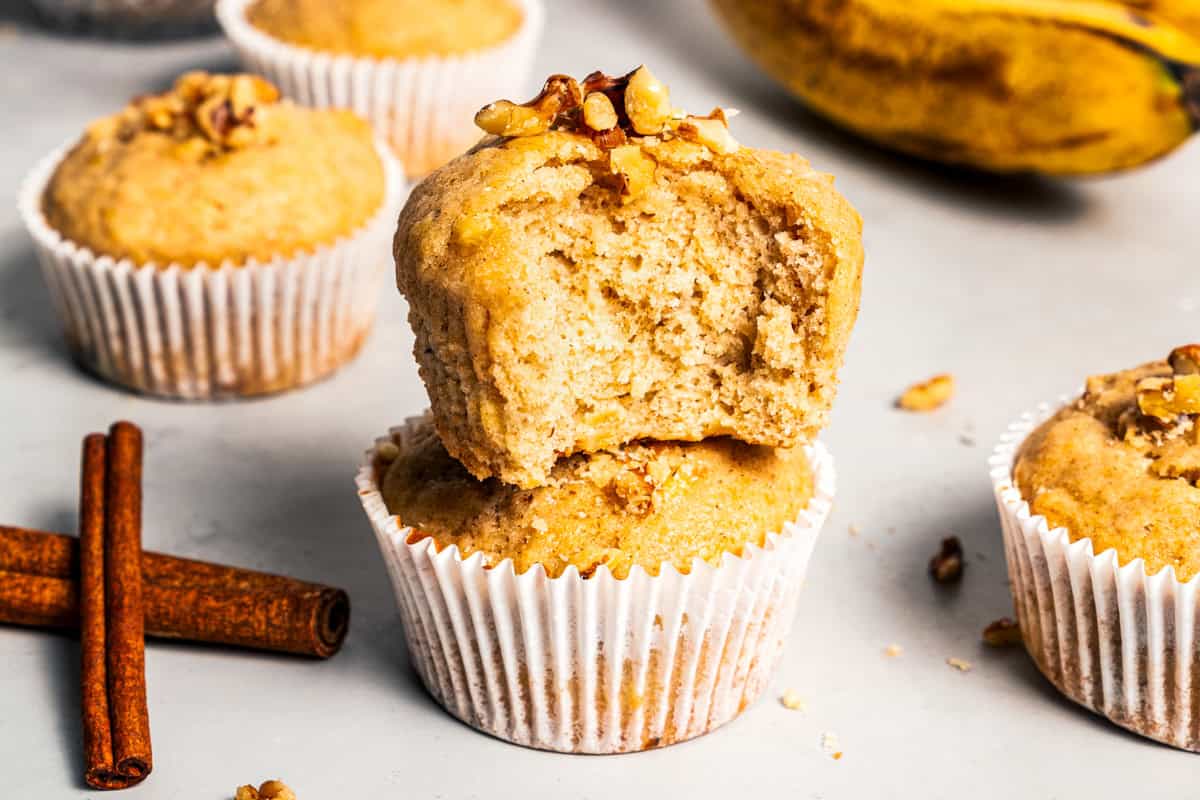
A warm oven changes the atmosphere of a kitchen in a way that feels almost immediate, as though the room itself begins to settle into rhythm. The scent of bananas caramelizing with heat carries a softness that makes even a quiet morning feel composed. In that space, baking becomes less about output and more about shaping something steady from simple ingredients.
Banana Walnut Protein Muffins sit in that intersection between nourishment and comfort, where texture matters as much as flavor. The goal is not to create something heavy or overly dense, but to build a muffin that holds structure while staying tender inside. Each ingredient plays a specific role, and the success of the final result depends on how carefully those roles are balanced.
Ingredients That Define Structure And Flavor
The foundation of any muffin begins with its dry base, where flour determines structure and stability. A moderate protein flour creates enough strength to hold shape without turning the crumb tight or dry. Baking powder provides lift, and its even distribution ensures that each muffin rises at the same pace rather than unevenly doming or collapsing.
Bananas bring natural sweetness and moisture that replace part of what refined sugar would normally contribute. Their ripeness is essential, as darker bananas carry deeper flavor and integrate more smoothly into the batter. Walnuts introduce texture and a subtle bitterness that balances the sweetness of the fruit, adding contrast rather than dominance.
Protein powder changes the dynamic of traditional muffins, adding density and nutritional value while requiring careful balancing so the crumb does not become dry. Milk or a milk alternative softens the mixture, while eggs bind everything into a cohesive batter. A small amount of salt sharpens flavor, preventing the sweetness from flattening across the palate.
Banana Walnut Protein Muffins depend on harmony between moisture and structure, and each ingredient contributes to that balance. Too much dry protein can overwhelm the softness, while too much banana can collapse the structure entirely. The final mixture should feel thick but scoopable, holding shape without resisting movement.
Mixing The Batter With Control And Intention
The process of combining ingredients determines texture more than the ingredients themselves. Dry components should be whisked thoroughly so that baking powder and protein powder distribute evenly through the flour. This step prevents uneven pockets that could affect both rise and crumb consistency during baking.
Wet ingredients require a gentler treatment, with bananas mashed until smooth but not completely liquefied. Small bits of banana can remain, as they melt slightly during baking and create pockets of moisture within the muffin. Eggs and milk should be incorporated until the mixture becomes unified, but not overworked, since excessive mixing tightens the structure.
Banana Walnut Protein Muffins develop their tenderness at this stage when dry and wet mixtures are combined carefully. Folding rather than stirring preserves air within the batter, which contributes to a lighter final texture. Walnuts are introduced last so they remain evenly distributed without sinking or breaking down into the mixture.
The batter should appear thick and slightly textured, holding its shape when scooped into a tray. A short resting period before baking allows the flour and protein powder to absorb moisture evenly, which stabilizes the structure. This pause also improves the final crumb by reducing dryness that sometimes comes from protein-enriched baking.
Protein Balance And Texture Development
Protein powder introduces both strength and challenge to muffin structure, requiring adjustments that go beyond standard baking ratios. It absorbs more liquid than flour, which means moisture must be carefully increased through bananas, milk, or oil. Without this adjustment, the final result risks becoming dry or crumbly rather than soft and cohesive.
The interaction between protein and gluten is subtle but important. While gluten provides elasticity, protein powder can sometimes interrupt that balance if used excessively. The goal is to maintain a crumb that feels tender while still holding enough structure to support the weight of walnuts and fruit.
Banana Walnut Protein Muffins reach their ideal texture when moisture is distributed evenly throughout the batter. Bananas play a critical role here, as they bind with both flour and protein, softening the overall structure while adding natural sweetness. Walnuts provide interruption within the softness, creating contrast that keeps each bite interesting.
The balance between softness and density defines the final experience more than any single flavor. A well-constructed muffin should feel substantial without being heavy, with a crumb that breaks gently rather than crumbling apart. This balance is achieved not through additional ingredients but through careful control of ratios and mixing technique.
Baking Time, Heat, And Oven Behavior
Oven temperature sets the foundation for how muffins rise and set. A moderate heat allows the structure to expand gradually without forming a crust too quickly. If the temperature is too high, the exterior firms before the interior has fully risen, resulting in uneven texture.
Once placed in the oven, the batter begins to transform almost immediately. The baking powder activates, creating lift that pushes the mixture upward, while proteins from eggs and powder begin to firm into structure. Banana Walnut Protein Muffins show their development in stages, first rising, then setting, and finally browning at the surface.
The aroma that fills the kitchen during baking reflects the interaction between banana sugars and heat. Walnuts toast gently on the surface, deepening their flavor and adding a subtle nuttiness that becomes more pronounced as baking continues. This combination creates a layered scent that signals the muffins are nearing completion.
Testing for doneness requires attention rather than precision timing. A light press on the surface should feel springy, and a skewer inserted into the center should come out clean or with only a few moist crumbs. Overbaking at this stage risks drying out the protein-enriched structure, which is more sensitive to heat than traditional batter.
Cooling, Storage, And Serving Texture
Cooling plays an often underestimated role in final texture. Removing muffins from the tray too early can cause them to break, while leaving them too long in heat can continue drying the crumb. Allowing them to rest briefly in the tray before transferring ensures structural stability.
Once fully cooled, Banana Walnut Protein Muffins settle into their final texture, where moisture redistributes evenly throughout the crumb. This resting phase softens the interior slightly, improving both flavor and mouthfeel. The walnuts become more integrated, and the banana flavor deepens as it settles.
Storage affects both freshness and texture over time. When kept in an airtight container, the muffins retain moisture for several days without losing structure. Slight warming before serving can restore softness, bringing back the just-baked quality that defines their appeal.
Serving can remain simple or be enhanced depending on preference. A light spread of nut butter adds richness and reinforces the walnut profile, while a drizzle of honey introduces brightness that complements banana sweetness. Even without additions, the muffins carry enough flavor and structure to stand on their own.
Final Thoughts
Banana Walnut Protein Muffins represent a balance between nourishment and comfort that depends entirely on control rather than complexity. Each ingredient carries a specific function, and the success of the final result depends on how carefully those functions are managed throughout the process. From mixing to baking, small decisions accumulate into texture and flavor that feel intentional rather than accidental.
What remains after baking is a muffin that feels grounded without being heavy, soft without collapsing, and flavorful without excess sweetness. The combination of banana, walnut, and protein creates a structure that holds together while still feeling tender in the bite. In the end, the process rewards attention and patience more than technique, leaving behind a result that feels both practical and deeply satisfying.