
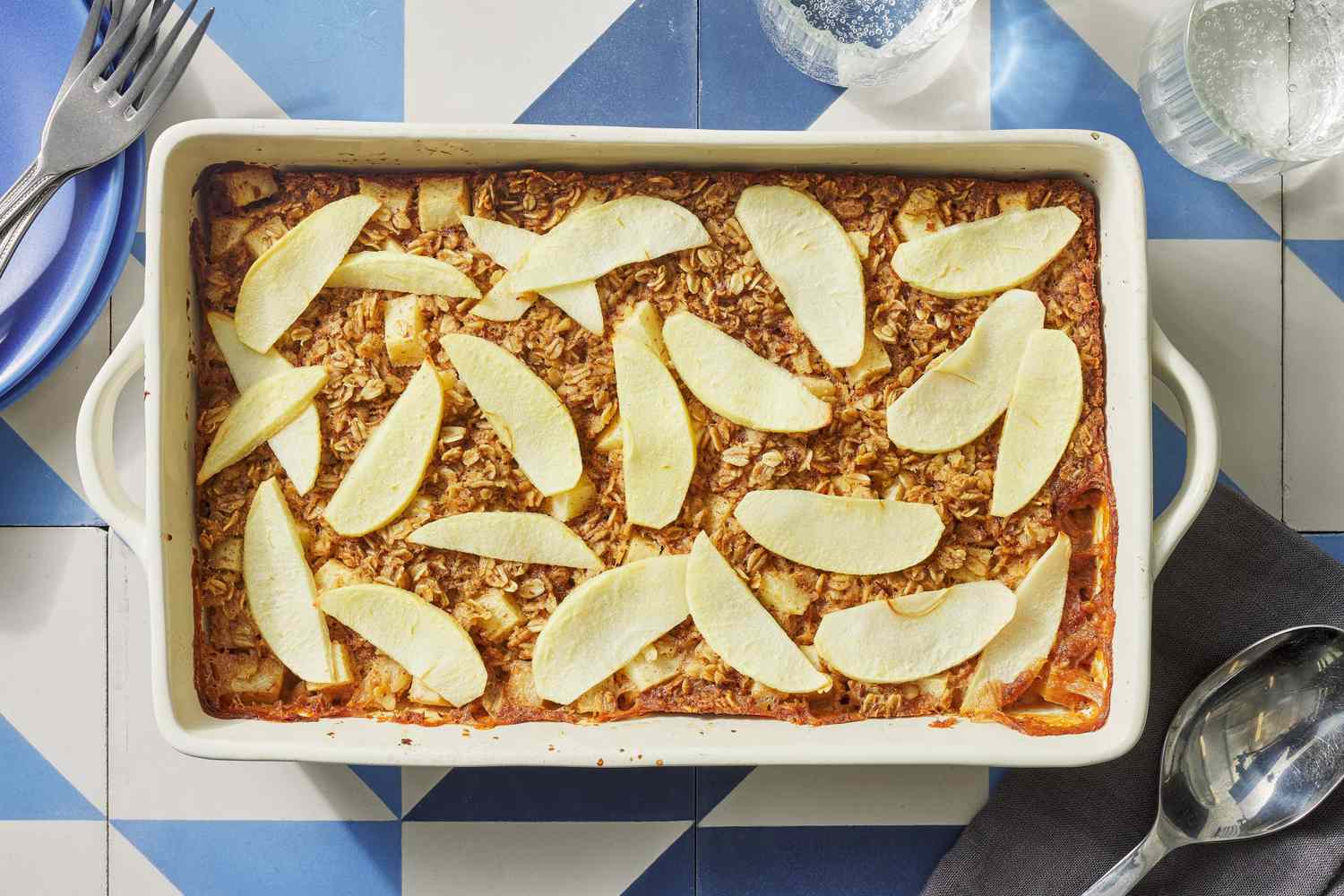
A baking dish coming out of the oven carries a kind of quiet confidence that fills a kitchen without needing attention. Steam rises gently from soft layers of oats, apples, and spice, settling into the air with a warmth that feels steady rather than sharp. Breakfast in this form becomes less about urgency and more about something prepared with intention and allowed to develop slowly.
Apple Cinnamon Baked Oatmeal sits comfortably between comfort food and practical nourishment, shaped by ingredients that soften and bind under heat. Apples break down into tender pieces, cinnamon moves through every layer, and oats absorb everything into a cohesive structure. What emerges is not separate components but a unified dish that holds both texture and warmth in equal measure.
Building The Oat Foundation
The base of baked oatmeal begins with rolled oats, which provide structure while still softening enough to feel tender once baked. Their ability to absorb liquid slowly is what allows the dish to set without becoming dense or overly heavy. Quick oats tend to break down too much, which can lead to a softer but less structured final texture.
Liquid is what transforms oats from dry grains into a cohesive bake. Milk or a plant-based alternative creates creaminess, while a small amount of eggs helps bind everything into a sliceable form. Without eggs, the mixture remains loose, but with them, the oatmeal gains enough structure to hold its shape once cooled.
Apple Cinnamon Baked Oatmeal depends heavily on how evenly this base is prepared before baking begins. Cinnamon should be distributed throughout the mixture so that every bite carries warmth rather than isolated pockets of spice. Sweeteners like maple syrup or honey blend into the liquid base, ensuring that sweetness is present but never overwhelming.
Salt plays a quiet but essential role in balancing flavor. Even in small amounts, it sharpens the natural sweetness of apples and enhances the depth of cinnamon. Without it, the dish can feel flat, even when all other elements are present.
Apples And Cinnamon As Core Flavor
Apples define both texture and flavor in baked oatmeal, shifting from firm slices to soft, almost jam-like pieces during baking. Their natural acidity balances the sweetness of the oats and syrup, preventing the dish from becoming overly rich. Varieties that hold shape slightly during cooking work best, as they provide contrast against the softened oats.
Cinnamon is the defining spice, weaving warmth through every layer of the dish. It does not dominate but instead integrates into the oats and apples, becoming part of the structure rather than a surface flavor. As it bakes, it deepens slightly, creating a fragrance that signals comfort without heaviness.
Apple Cinnamon Baked Oatmeal relies on the interaction between fruit and spice more than any single ingredient. Apples release moisture as they bake, which infuses the oats with flavor while helping them soften evenly. Cinnamon amplifies this effect, creating a layered profile that develops gradually rather than all at once.
Additional spices such as nutmeg or allspice can be added, but they should remain secondary. Their role is to support cinnamon rather than compete with it. Even small adjustments in spice balance can shift the character of the dish significantly.
Mixing And Assembly Before Baking
The process of assembling baked oatmeal requires attention to distribution rather than technique. Dry ingredients should be mixed first to ensure oats and spices are evenly combined. This prevents uneven flavor pockets once liquid is added.
Wet ingredients are then incorporated slowly so that the oats absorb liquid evenly. Apples are folded in at this stage, ensuring they are spread throughout the mixture rather than concentrated in one area. This step determines how balanced each serving will be once baked.
Apple Cinnamon Baked Oatmeal benefits from a short resting period before entering the oven. This allows oats to begin absorbing liquid early, which improves final texture and reduces uneven baking. The mixture thickens slightly during this time, signaling that the oats are beginning their transformation.
A baking dish should be lightly greased to prevent sticking while also allowing edges to develop a subtle firmness. The mixture is then poured evenly, with attention paid to smoothing the surface so it bakes consistently. Small adjustments at this stage influence how evenly the final dish sets.
Baking Process And Structural Development
Heat gradually transforms the mixture from loose oats into a firm, cohesive bake. The eggs set first, creating structure that holds the oats and apples together. As baking continues, moisture redistributes throughout the dish, softening the oats while firming the overall structure.
Apples release their juices during baking, which blend into the oats and create pockets of softness. These pockets contrast with firmer sections, giving the dish a varied texture rather than uniform density. Cinnamon continues to spread through the mixture, intensifying as heat develops its aromatic compounds.
Apple Cinnamon Baked Oatmeal reaches its ideal texture when the center is set but still slightly soft. Overbaking can dry out the oats, while underbaking leaves the structure too loose. The correct balance results in a dish that holds together when sliced but remains tender when eaten.
The surface often develops a light golden crust during baking. This layer adds subtle contrast to the softer interior and enhances the overall texture. It is not meant to be crisp but rather gently firm, providing structure at the top of the dish.
Serving Warmth And Texture Balance
Once removed from the oven, the baked oatmeal should rest briefly before serving. This allows the structure to stabilize and makes slicing easier without breaking apart. During this time, flavors continue to settle and integrate more fully.
Apple Cinnamon Baked Oatmeal can be served warm or at room temperature, depending on preference. Warm servings highlight softness and aroma, while cooler servings offer a firmer, more structured texture. Both versions maintain the core flavor profile, though the mouthfeel changes noticeably.
Toppings can enhance the dish without overpowering its base. A drizzle of maple syrup adds brightness, while yogurt introduces creaminess that contrasts with the oats. Nuts provide crunch that offsets the softness of baked fruit and grains.
Storage does not diminish flavor, though texture continues to firm slightly over time. Reheating restores softness and revives the aromatic qualities of cinnamon and apple. This makes the dish suitable for preparing ahead while still maintaining quality.
Final Thoughts
Apple Cinnamon Baked Oatmeal is built on slow transformation rather than immediate preparation. Each ingredient plays a role that only fully develops under heat, from oats absorbing liquid to apples softening into sweetness and cinnamon weaving through every layer. The result is a dish shaped by patience and balance rather than complexity.
What remains after baking is a cohesive structure that feels both nourishing and comforting. The texture holds together while remaining tender, and the flavor carries warmth without heaviness. In the end, it reflects how simple ingredients can create depth when given time to merge naturally under steady heat.